

How to Test and Maintain Pool Chemicals Effectively
- Clear water doesn’t guarantee balanced or safe pool chemistry.
- Test regularly and adjust chemicals in the correct order: alkalinity → pH → calcium → chlorine → CYA/TDS.
- Middle Eastern heat and evaporation accelerate chlorine loss and chemical imbalance.
- Consistent testing protects swimmers, surfaces, and equipment longevity.
Table of Content
A crystal-clear pool can still harbor unsafe water chemistry. Without regular testing and careful balancing, even the most picture-perfect-looking pool risks damaging equipment, irritating skin, and breeding bacteria beneath the surface. For pool owners across the Middle East, where extreme heat accelerates chemical reactions and intensifies evaporation, understanding pool chemistry is essential to protecting both swimmers and the significant investment a pool represents.
This guide walks through the fundamentals of testing pool chemicals, balancing water in the correct order, and managing the unique challenges that come with maintaining a pool in a desert climate.
Understanding Pool Chemistry Basics
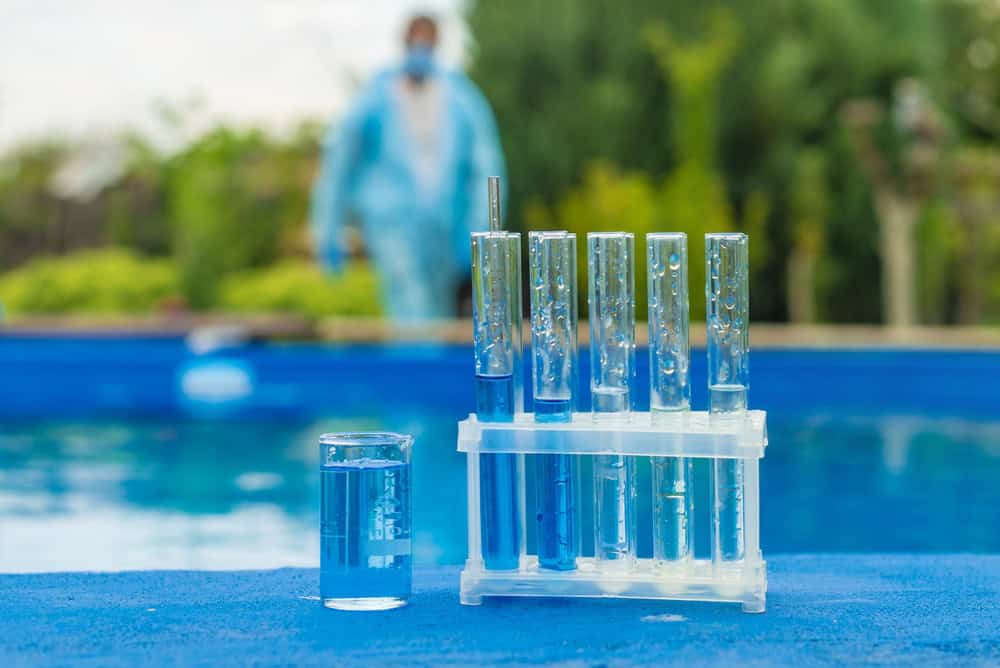
Every pool relies on a handful of chemical parameters working together. When one falls out of range, the others shift with it — creating a chain reaction that compounds quickly if left unchecked.
Here are the key parameters and their ideal ranges:
- pH (7.4–7.6): Controls how acidic or alkaline your water is. Outside this range, chlorine loses effectiveness and swimmers experience skin and eye irritation.
- Free Chlorine (1–3 ppm): The active sanitizer killing bacteria and algae. Total chlorine minus free chlorine reveals combined chlorine (chloramines), which causes that harsh “chlorine smell.”
- Total Alkalinity (80–120 ppm): Acts as a buffer for pH, preventing wild fluctuations. Low alkalinity causes pH to bounce unpredictably.
- Calcium Hardness (200–300 ppm): Too low corrodes surfaces and equipment; too high causes scaling on tiles and plumbing.
- Cyanuric Acid/CYA (35–60 ppm): Shields chlorine from UV degradation — particularly critical under the intense Middle Eastern sun.
- Total Dissolved Solids/TDS (below 1,500 ppm): Measures accumulated dissolved materials. High TDS reduces chemical effectiveness and causes cloudy water.
Balanced pool chemistry protects equipment longevity, ensures swimmer comfort, and keeps sanitizers working at peak efficiency.
Essential Pool Chemicals You Need
Pool chemicals generally fall into four categories. Knowing what each does — and when to reach for it — prevents both over-treatment and costly neglect.
Sanitizers
- Chlorine tablets (trichlor): slow-dissolving, ideal for consistent daily sanitation
- Liquid chlorine (sodium hypochlorite): fast-acting for quick adjustments
- Salt chlorine generators: convert dissolved salt to chlorine through electrolysis
- Pool shock (calcium hypochlorite, dichlor, or potassium monopersulfate): oxidizes contaminants and restores free chlorine levels
Water Balancers
- Sodium bicarbonate: raises alkalinity
- Soda ash (sodium carbonate): raises pH
- Muriatic acid or dry acid (sodium bisulfate): lowers pH and alkalinity
- Calcium chloride: raises calcium hardness.
Algae Control
- Algaecides: preventive treatments for recurring algae problems
- Phosphate removers: eliminate the nutrients algae feed on
Specialty Chemicals
- Filter cleaners, tile cleaners, and chlorine neutralizers (sodium thiosulfate) for targeted maintenance tasks
How to Test Pool Water: Methods and Frequency
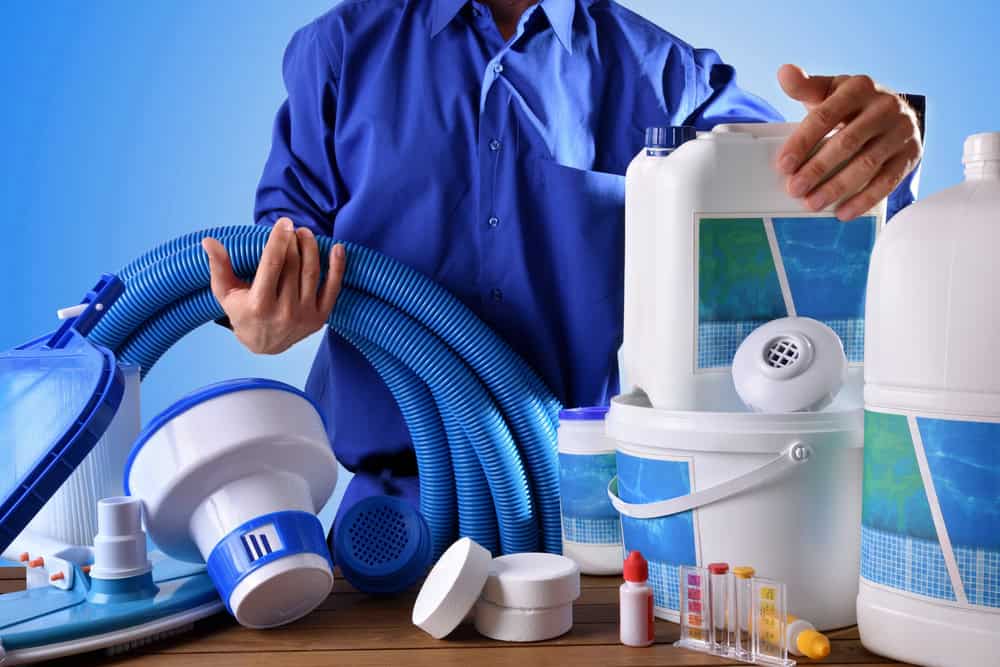
Accurate pool water testing starts with choosing the right method and sticking to a consistent schedule.
Testing Methods
- Test strips: Dip underwater for 2–3 seconds, wait 15 seconds, and compare pad colors to the chart. Quick and convenient for daily checks, though less precise than alternatives.
- Liquid test kits: Fill vials with pool water, add reagents, shake, and match the resulting color. More accurate than strips and preferred for weekly comprehensive testing.
- Digital testers: Provide precise numerical readings. Higher upfront cost, but they eliminate the guesswork of color matching entirely.
Testing Schedule
- Daily: pH and free chlorine during peak swimming season
- Weekly: Total alkalinity and calcium hardness
- Monthly: CYA and TDS levels
Sample Collection Tips:
Collect water samples in the afternoon after the circulation system has been running. Draw from approximately 18 inches (45 cm) below the surface, away from return jets and skimmers, to avoid skewed readings from concentrated or diluted pockets.
How to Balance Pool Chemicals
The order in which you adjust chemicals actually matters as much as the quantities. Each one influences and reacts with the next, so following this sequence prevents redundant corrections and wasted product.
- Step 1 — Alkalinity (80–120 ppm) Adjust first because alkalinity directly controls pH stability. Add sodium bicarbonate to raise; muriatic acid to lower.
- Step 2 — pH (7.4–7.6) With alkalinity stable, pH adjustments hold. Add soda ash to raise; muriatic acid or dry acid to lower.
- Step 3 — Calcium Hardness (200–300 ppm) Add calcium chloride to raise. Lowering requires partial draining and refilling with fresh water.
- Step 4 — Chlorine (1–3 ppm) Add tablets, liquid chlorine, or shock as needed to reach the target range.
- Step 5 — CYA (35–60 ppm) and TDS (below 1,500 ppm) Add stabilizer to raise CYA. High TDS requires partial water replacement — there is no chemical shortcut.
- Step 6 — Shock Treatment Shock weekly or biweekly to oxidize chloramines and organic contaminants.
- Step 7 — Retest Wait a minimum of 6 hours between adjustments, then verify all parameters are within range before making further changes.
Common Pool Chemistry Problems and Solutions
- Cloudy water: Typically caused by high pH, elevated alkalinity, or poor filtration. Correct the chemical imbalance first, then check filter function.
- Green water (algae): Requires aggressive shock treatment followed by algaecide and thorough brushing. Prevention through consistent chlorine levels is far easier than the cure.
- Strong chlorine smell (chloramines): Ironically signals too little active chlorine, not too much. Combined chlorine above 0.5 ppm means breakpoint shock treatment is needed.
- pH bouncing: Almost always caused by low alkalinity. Stabilize alkalinity first, and pH holds steady.
- Scaling and staining: Results from high calcium hardness or dissolved metals. Address the underlying chemistry before scaling causes permanent equipment damage.
Seasonal Considerations for Middle Eastern Pools
Desert climates create specific challenges that pool owners elsewhere rarely face. Summer temperatures routinely exceeding 45°C dramatically accelerate chlorine consumption, while intense UV radiation degrades sanitizer faster than in temperate regions — even with adequate CYA levels.
High evaporation rates concentrate dissolved chemicals, which can push calcium hardness and TDS out of range without any chemicals being added. During peak season, testing pool chemicalsdaily becomes a necessity. On top of that, sandstorms and dust events introduce particulates that increase chemical demand and strain filtration systems, often requiring additional shock treatments afterward.
Chemical Storage and Safety
Proper storage preserves chemical potency and prevents dangerous accidents. Keep all products in a cool, dry, and well-ventilated area away from direct sunlight. Never store different pool chemicals together — certain combinations produce toxic fumes or combustion. Always wear protective gloves and eyewear when handling chemicals, and keep all products securely away from children and pets.
When to Call Professionals
Some issues exceed the scope of home testing. Occurrences like persistent cloudiness despite balanced readings, recurring algae outbreaks, or visible equipment corrosion all warrant professional evaluation. Monthly professional water analysis can detect problems that standard home test kits miss, including metal content and saturation index imbalances that lead to long-term structural damage.
Professional service also provides peace of mind that your equipment is operating efficiently and your methods are returning accurate results.
Trust Reza Pools & Courts for Pool Maintenance
The key to proper pool maintenance is consistency and accuracy. Building the proper routine to keep pool chemicals at the right levels will pay dividends in the end, as over time, this discipline saves significant money on both chemicals and equipment repairs.
For expert guidance on how to maintain pool chemicals and professional water analysis, consult with the specialists at Reza Pools & Courts for pool water maintenance tailored to Middle Eastern conditions.
References
Pool Water 101: Chemicals, Testing and Balancing. Retrieved February 18, 2026, from https://www.lathampool.com/resources/pool-maintenance-hub/pool-water-101-chemicals-testing-and-balancing/
Ultimate Pool Chemistry Cheat Sheet. Retrieved February 18, 2026, from https://pool.dreametech.com/blogs/blog/ultimate-pool-chemistry-cheat-sheet
Frequently Asked Questions About Pool Water Testing
Q: How often should I test my pool water in hot climates?
A: During peak summer, test pH and free chlorine daily. Total alkalinity and calcium hardness should be checked weekly, while CYA and TDS can be monitored monthly.
Q: What is the ideal pH level for a pool?
A: The ideal range is 7.4–7.6. Outside this range, chlorine becomes less effective, and swimmers may experience irritation.
Q: Why does my pool smell strongly of chlorine?
A: A strong chlorine smell usually indicates chloramines (combined chlorine), meaning there isn’t enough active free chlorine. Shock treatment is typically required.
Q: Why does pool chemistry need to be adjusted in a specific order?
A: Each chemical affects the others. Adjusting alkalinity first stabilizes pH, preventing repeated corrections and unnecessary chemical use.
Q: How does extreme heat affect pool water?
A: High temperatures and UV exposure increase chlorine consumption and evaporation, concentrating dissolved solids and calcium levels.
Q: What causes cloudy pool water?
A: Common causes include high pH, elevated alkalinity, poor filtration, or high TDS levels.
Q: When should I call a professional pool service?
A: Persistent cloudiness, recurring algae, scaling, corrosion, or inconsistent test results may require professional water analysis and equipment inspection.