

Pool Filter Cleaning Guide and Maintenance Schedule
- Most residential pool filters need cleaning every 4 to 6 weeks, though Saudi Arabia’s dust and heat often demand a shorter cycle.
- Cartridge, sand, and DE filters each require different cleaning methods and replacement schedules.
- A rising pressure gauge reading is one of the most reliable indicators that your filter needs immediate attention.
- Professional servicing catches mechanical issues and chemical imbalances that routine cleaning alone cannot address.
Table of Content
A pool filter quietly traps debris, oils, and microscopic particles that would otherwise compromise water clarity and swimmer safety. In Saudi Arabia, where sandstorms, dust, and temperatures exceeding 45°C push filtration systems beyond what milder climates demand, keeping that filter clean is foundational to pool performance.
This guide covers how often to clean your pool filter, the proper process for each filter type, and why Reza Pools & Courts is a trusted pool maintenance company for filtration services across Saudi Arabia.
Why Pool Filters Matter
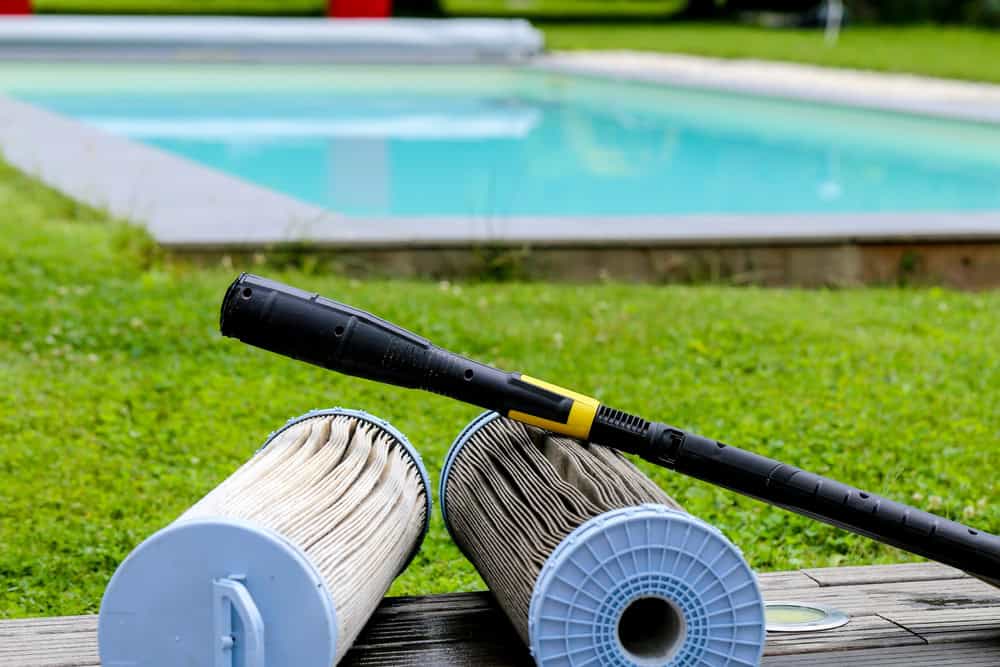
Pool filters are the first line of defense, removing leaves, insects, hair, sunscreen, fine dust, and particles invisible to the naked eye. Without effective filtration, even balanced chemistry cannot prevent cloudiness, algae, or bacterial buildup.
A maintained filter supports pH stability and protects pumps, heaters, and plumbing from premature wear. Neglecting maintenance leads to reduced flow, higher energy costs, and costly repairs.
How Often to Clean Pool Filter (and Why It Varies)
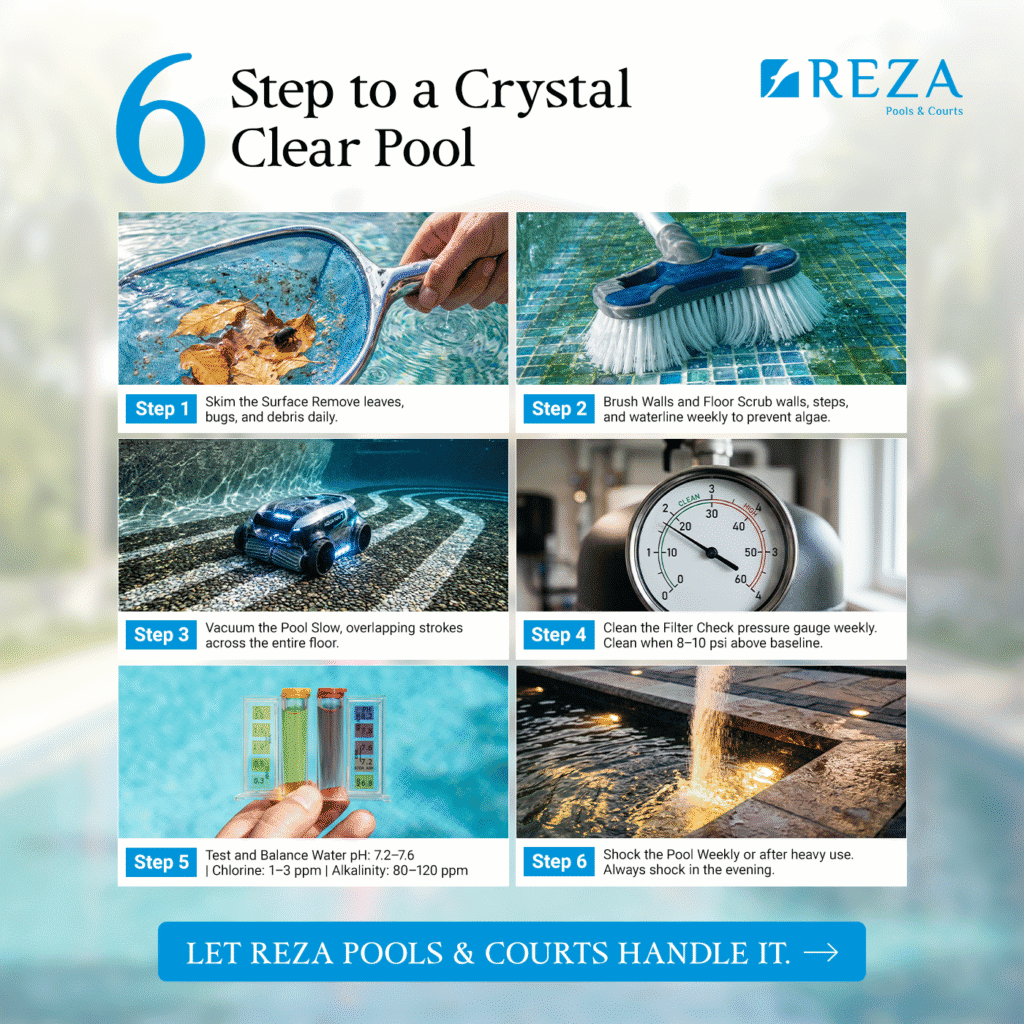
The general guideline for how often pool filters should be cleaned is every 4 to 6 weeks for residential pools. However, several factors can shorten that window.
A pool used daily accumulates contaminants faster than one used on weekends. Environmental factors matter too: pools near construction, open desert, or heavy foliage need more frequent care. In Saudi Arabia, dust storms can clog a filter in days. Your pressure gauge provides the most accurate signal: when the reading climbs 8 to 10 psi above baseline, it is time to clean.
Types of Pool Filters and Their Cleaning Methods
Each filter type operates differently and demands a specific cleaning approach.
1. Cartridge Filters
Cartridge filters use pleated polyester fabric to capture particles. They are popular for residential pools due to their simple maintenance.
Cleaning steps: Turn off the pump and relieve system pressure before opening the housing. Remove the cartridge and rinse with a garden hose, working top to bottom through each pleat. For deep cleaning, soak overnight in a filter cleaning solution. Inspect for tears or thinning. Damaged cartridges should be replaced immediately.
Replacement is typically needed every 1 to 2 years.
2. Sand Filters
Sand filters push water through a bed of specially graded sand that traps debris as small as 20 to 40 microns. They are common in larger residential and commercial pools.
Backwashing method: Turn off the pump before adjusting any valves. Set the multiport valve to “Backwash” and run until the sight glass water runs clear (usually 2 to 3 minutes). Switch to “Rinse” for 30 seconds to resettle the sand bed. Return to “Filter” mode and resume normal operation.
Sand media should be replaced every 3 to 5 years as the grains lose their angular edges and trapping ability.
3. Diatomaceous Earth (DE) Filters
DE filters provide the finest filtration available, capturing particles as small as 2 to 5 microns using a coating of fossilized diatom powder on internal grids.
Cleaning steps: Backwash the system following the same valve procedure as a sand filter. After backwashing, recharge by adding fresh DE powder through the skimmer with the pump running. Every 6 months, perform a full disassembly: remove grids, hose them down individually, inspect for tears, and reassemble before recharging.
Signs Your Pool Filter Needs Cleaning
Knowing how often you should clean your pool filter by the calendar is useful, but the pool itself will signal when service is overdue:
Cloudy or greenish water despite proper chemical levels. Noticeably weaker water flow from return jets. Pressure gauge reading 8 to 10 psi above the clean baseline. Debris returning to the pool through the jets. Increased chlorine consumption without changes in usage or weather.
Step-by-Step Guide: How to Clean Your Pool Filter
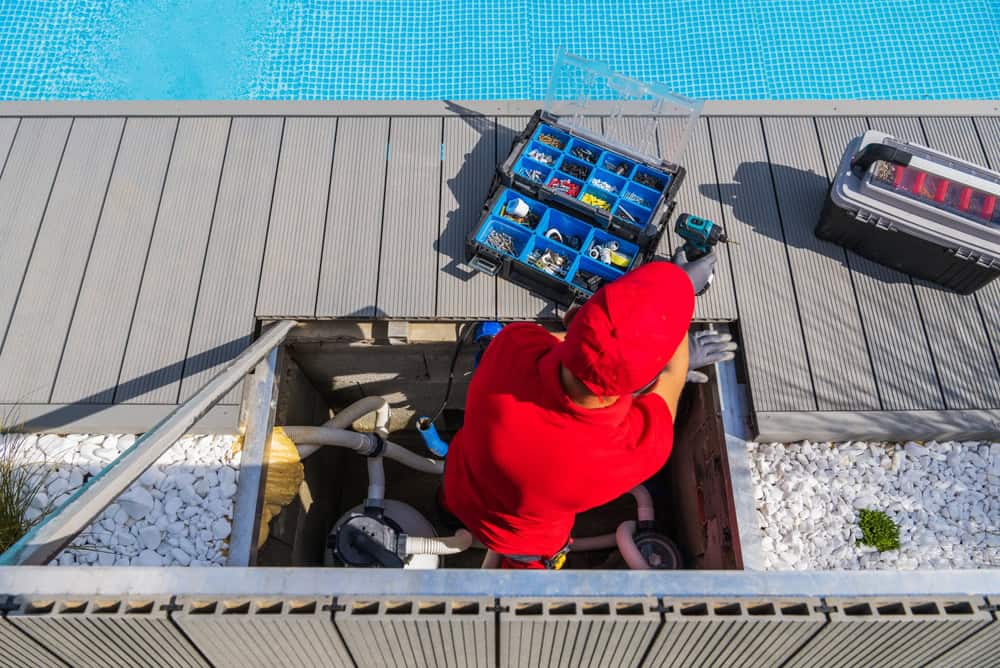
Image alt text: A homeowner performing routine pool filter maintenance
Regardless of filter type, every cleaning should follow a safe process.
- Step 1: Turn off the pump and disconnect electricity.
- Step 2: Relieve pressure using the air relief valve before opening the housing.
- Step 3: Clean using the method appropriate to your filter type. Refer to manufacturer instructions.
- Step 4: Inspect O-rings, gaskets, and fittings for wear. Replace worn seals before reassembling.
- Step 5: Reassemble, ensuring all clamps and valves are secure. Check for leaks on restart.
- Step 6: Test the water. Backwashing removes treated water, so recheck pH and chlorine levels.
Common Mistakes to Avoid
Skipping the rinse cycle after backwashing. Loose debris resettles and returns to the pool on startup.
Using a high-pressure nozzle on cartridge filters. Excessive pressure damages pleated fabric, creating gaps that let particles through.
Ignoring the pressure gauge. This is the most reliable indicator of filter condition. Without tracking it, you risk premature cleaning or dangerous overclogging.
Overcleaning. Cleaning too frequently can remove debris layers that actually improve filtration. Follow the pressure-based schedule rather than an arbitrary calendar.
Professional Pool Filter Maintenance: When to Call the Experts
Some issues go beyond a standard cleaning. Persistent cloudy water despite balanced chemistry often points to cracked grids, sand channeling, or a failing multiport valve. Housing leaks or unstable pressure also warrant professional evaluation.
Commercial pools and high-capacity systems benefit from scheduled servicing with full diagnostics. Seasonal service is equally important: pre-summer prep and post-dust-storm recovery keep filtration reliable year-round.
Why Choose Reza Pools & Courts for Pool Filter Maintenance
With over 40 years of experience building and maintaining pools across Saudi Arabia, Reza Pools & Courts brings unmatched filtration expertise. As a trusted pool maintenance company, we provide reliable scheduling, performance checks, and professional water testing.
Our services include eco-friendly filtration upgrades and long-term care plans for Saudi Arabia’s climate, serving residences, compounds, hospitality properties, and commercial facilities.
Want crystal-clear water and a pool filter that performs year-round? Contact Reza Pools & Courts for expert filter cleaning and reliable pool maintenance services anywhere in Saudi Arabia.
References
- How to Clean a Pool Filter. Retrieved February 20, 2026, from https://www.lowes.com/n/how-to/how-to-clean-a-pool-filter
- Pool Filter Maintenance Guide. Retrieved February 24, 2026, from https://www.swimuniversity.com/pool-filter/
Frequently Asked Questions About Pool Filter Cleaning
Q: How often should I clean my pool filter?
A: Most residential pools require filter cleaning every 4 to 6 weeks. In Saudi Arabia, dust storms and heavy use may require more frequent service. Monitor your pressure gauge for the most accurate timing.
Q: What is the best way to know when my filter needs cleaning?
A: Check your filter's pressure gauge. When the reading is 8 to 10 psi above the clean baseline, the filter needs cleaning regardless of the calendar schedule.
Q: Can I use a pressure washer to clean my cartridge filter?
A: No. High-pressure nozzles damage the pleated fabric and reduce filtration effectiveness. Use a standard garden hose and work from top to bottom through each pleat.
Q: How often should sand in a sand filter be replaced?
A: Sand media should be replaced every 3 to 5 years. Over time, the grains lose their angular shape and become less effective at trapping fine particles.
Q: Why is my pool still cloudy after cleaning the filter?
A: Persistent cloudiness after a cleaning may indicate damaged filter media, a cracked internal grid, or a malfunctioning multiport valve. Professional inspection is recommended.
Q: Does the Saudi climate affect how often pool filters should be cleaned?
A: Yes. Sandstorms, airborne dust, and extreme heat increase the particulate load on filters significantly. Pools in Saudi Arabia typically require more frequent cleaning than pools in temperate climates.
Q: When should I call a professional for filter maintenance?
A: Contact a professional if you experience persistent cloudy water, filter leaks, pressure irregularities, or if you manage a commercial or high-capacity pool system that requires specialized servicing.