

How to Clean a Pool: A Step-by-Step Guide for Clear Water
- Regular pool cleaning prevents algae, cloudy water, and chemical imbalance before they become costly problems.
- A complete cleaning routine includes skimming, brushing, vacuuming, filter care, water testing, and shock treatment.
- Saudi Arabia’s dust, sand, and extreme heat increase cleaning frequency beyond what standard guidelines suggest.
- Professional pool cleaning services save time and protect your investment through expert chemical handling and early problem detection.
Table of Content
Owning a pool means owning the responsibility that comes with it. A clean swimming pool is not just about appearance; it is about protecting swimmer health, preserving equipment, and maintaining the water chemistry that holds everything in balance. In Saudi Arabia, where dust, sand, and temperatures above 45°C put constant pressure on pool systems, a disciplined cleaning routine is essential.
This guide walks through how to clean a pool properly, the tools and chemicals required, and why Reza Pools & Courts is the trusted choice for pool cleaning services in Saudi Arabia.
Why Pool Cleaning Matters
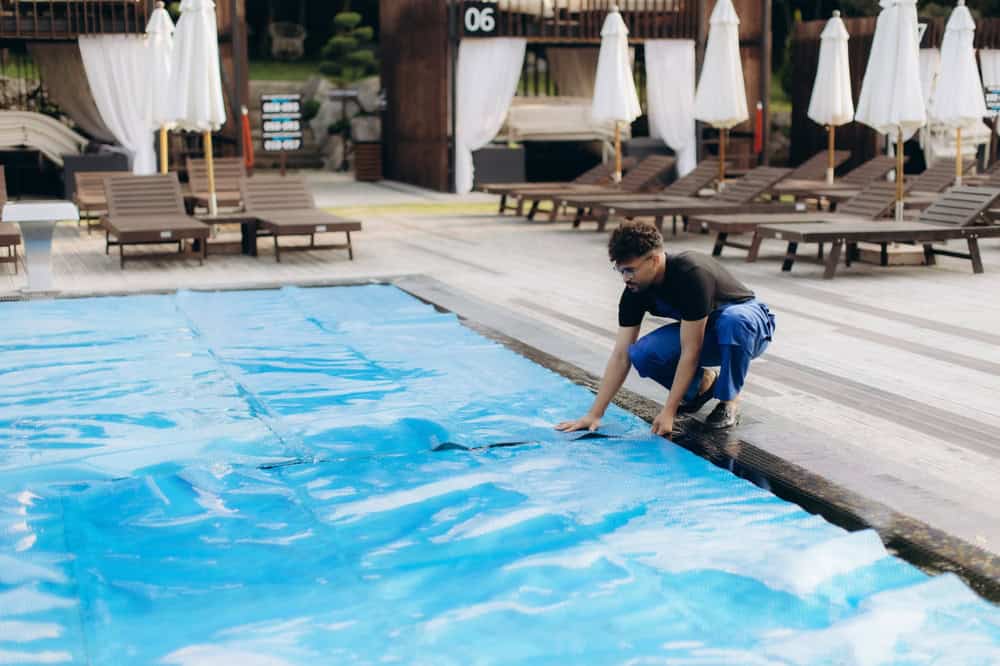
Routine cleaning is the foundation of safe pool ownership. Without it, organic debris feeds algae, oils cloud the water, and fine particles clog filtration systems. These problems compound quickly: algae leads to chemical imbalance, clogged filters reduce circulation, and poor circulation accelerates bacteria.
A neglected pool also deteriorates faster. Stained surfaces, corroded fittings, and overworked pumps all trace back to inconsistent maintenance. Keeping a clean swimming pool protects swimmers and equipment alike.
What Do You Need to Clean a Pool?
Before starting, gather the right equipment. Here is what you need to clean a pool effectively:
- Skimmer net: A long-handled net for scooping leaves, insects, and floating debris from the surface. The most frequently used tool in daily maintenance.
- Pool brush: Nylon bristles suit vinyl and fiberglass; stainless steel works for concrete and plaster. Brushing prevents algae from taking hold where sanitizer alone cannot reach.
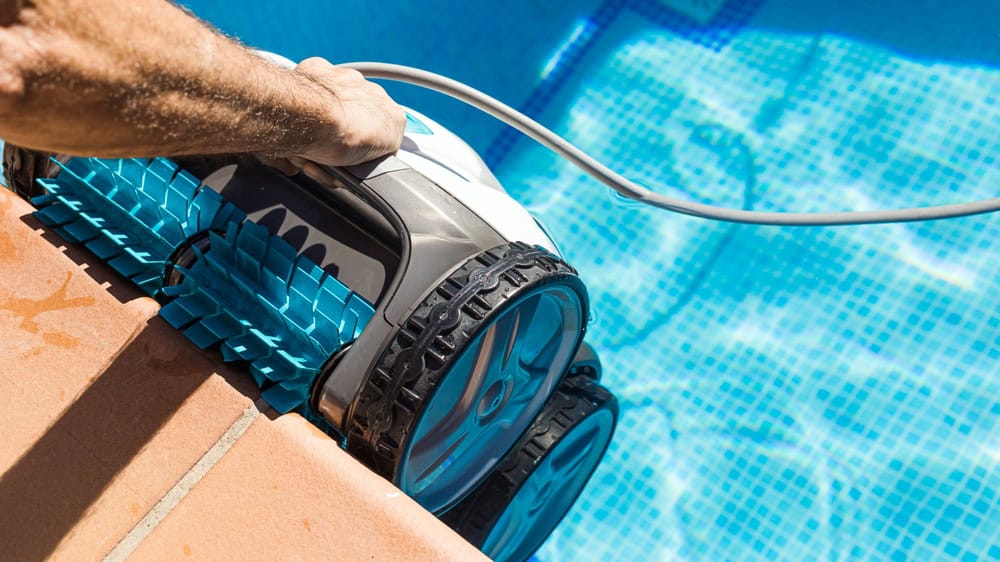
- Pool vacuum (manual or automatic): Manual vacuums connect to the skimmer line and require guiding across the floor. Automatic cleaners operate independently as suction-side, pressure-side, or robotic units.
- Test kit: Liquid reagent kits or digital testers measure pH, chlorine, and alkalinity. Test strips offer a quicker but less precise alternative.
- Chemicals: Chlorine for sanitation, algaecide for prevention, pH adjusters (soda ash to raise, muriatic acid to lower), and sodium bicarbonate for alkalinity correction.
Steps to Cleaning a Pool
A complete pool cleaning follows a specific sequence. Each step builds on the last, so skipping ahead wastes effort and product.
Step 1: Skim the Surface
Use a long-handled skimmer net to remove leaves, insects, and floating debris. This should be done daily, or more often during sandstorms and windy conditions. Removing surface debris before it sinks prevents it from decomposing on the pool floor, which increases chemical demand and feeds algae.
Step 2: Brush Pool Walls and Floor
Brush the walls, floor, steps, ladders, and waterline at least once or twice a week. Focus on corners, behind ladders, and around fittings where algae tends to establish itself first. Brushing loosens sediment and biofilm so that the filtration system and sanitizer can do their job effectively.
Step 3: Vacuum the Pool
After brushing pushes debris into the water, vacuum it out. With a manual vacuum, work in slow, overlapping strokes across the entire floor. Automatic cleaners can run on a schedule, though manual vacuuming weekly is recommended to catch what robotic units miss in corners and along steps.
Step 4: Clean the Pool Filter
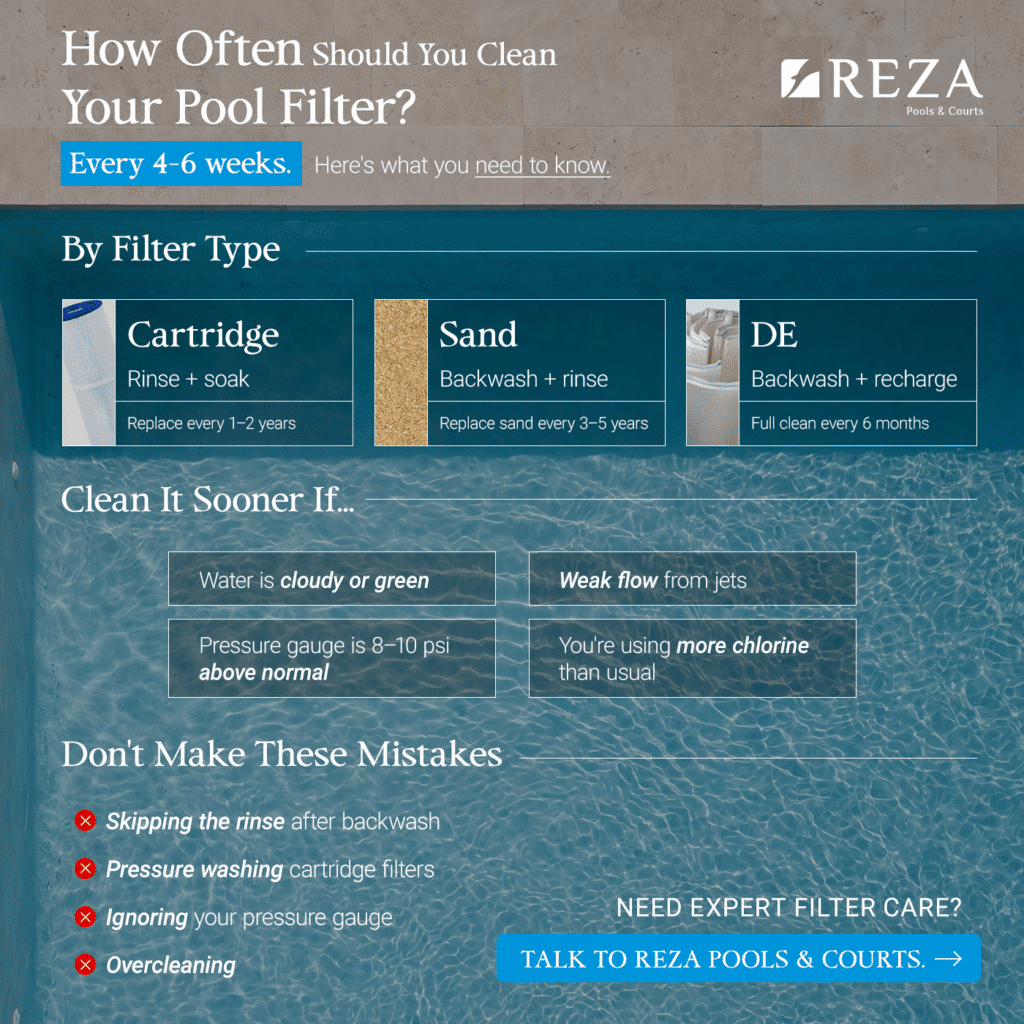
Your filter traps fine particles that skimming and vacuuming leave behind. Check the pressure gauge weekly: a reading 8 to 10 psi above baseline means it is time to clean. Cartridge filters are rinsed and soaked, sand filters are backwashed, and DE filters are backwashed then recharged with fresh powder. Deep clean monthly and inspect seasonally.
Step 5: Test and Balance the Water
Test pH, chlorine, and alkalinity at least twice a week using a liquid test kit or digital tester. The ideal ranges are:
- pH: 7.2 to 7.6
- Free Chlorine: 1 to 3 ppm
- Total Alkalinity: 80 to 120 ppm
Adjust alkalinity first, then pH, then chlorine. This sequence prevents redundant corrections because each parameter influences the next.
Step 6: Shock the Pool (As Needed)
Shock treatment adds a concentrated dose of chlorine to destroy chloramines, bacteria, and early-stage algae. Shock weekly during heavy-use periods or after pool parties, storms, and dust events. Always shock in the evening to prevent UV degradation, and wait until free chlorine drops below 5 ppm before swimming.
How Often Should You Clean Your Pool?
The steps to cleaning a pool are straightforward, but frequency depends on usage, environment, and season:
Daily: Skim the surface and check that the pump is running. Weekly: Brush walls and floor, vacuum, and test water chemistry. Monthly: Deep clean the filter, shock the water, and inspect equipment.
In Saudi Arabia, these frequencies often increase. Airborne dust and sand clog filters faster and raises chemical consumption. Summer heat accelerates chlorine breakdown, requiring more frequent testing. After sandstorms, an unscheduled skim, vacuum, and shock cycle is typically necessary.
Hiring a Professional Pool Cleaning Company in Saudi Arabia
Even diligent pool owners benefit from professional support. A dedicated pool cleaning services provider brings scheduled visits, advanced equipment, proper chemical handling, and trained eyes that catch problems before they escalate.
Professional teams also bring regional expertise. Managing water chemistry in Saudi Arabia requires understanding how extreme heat, UV exposure, and mineral-heavy water interact with sanitation systems. Reza Pools & Courts offers full-service swimming pool maintenance for homes, villas, resorts, and clubs across Saudi Arabia, handling everything from routine cleaning to chemical balancing, filter servicing, and equipment diagnostics.
Why Choose Reza Pools & Courts
With over 40 years of experience, Reza Pools & Courts delivers pool cleaning services in Saudi Arabia backed by deep technical knowledge. We provide reliable scheduling, professional-grade tools, and water chemistry management designed for Middle Eastern conditions.
Whether you manage a private residence, compound, or hospitality property, we tailor maintenance plans to your facility, keeping your water crystal clear year-round.
Want crystal-clear water all year long? Contact Reza Pools & Courts for expert pool cleaning and maintenance services in Saudi Arabia.
References
Guidelines for Keeping Your Pool Safe and Healthy. Retrieved February 20, 2026, from https://www.cdc.gov/healthy-swimming/safety/what-you-can-do-to-stay-healthy-in-swimming-pools.html
Swimming Pools and Similar Environments. Retrieved February 20, 2026, from https://www.who.int/publications/i/item/9241546808
Frequently Asked Questions About Pool Cleaning
Q: What chemicals do I need to keep my pool clean?
A: At minimum, you need chlorine for sanitation, a pH adjuster (soda ash or muriatic acid), sodium bicarbonate for alkalinity, and algaecide for prevention. A shock treatment product is also essential for weekly or as-needed use.
Q: What is the correct order for balancing pool chemicals?
A: Adjust alkalinity first (80 to 120 ppm), then pH (7.2 to 7.6), then chlorine (1 to 3 ppm). This sequence prevents each adjustment from throwing off the others.
Q: How do I know if my pool needs shock treatment?
A: Shock when you notice a strong chlorine smell (which indicates chloramines), cloudy water, visible algae, or after heavy use, storms, or dust events.
Q: Can I clean my pool without a vacuum?
A: Brushing and skimming help, but vacuuming is necessary to remove settled debris from the floor. Without it, particles decompose and increase chemical demand.
Q: Why is pool cleaning more demanding in Saudi Arabia?
A: High temperatures accelerate chlorine loss, sandstorms introduce heavy particulate loads, and persistent dust clogs filters faster. These factors require more frequent skimming, testing, and filter maintenance.