

Pool alkalinity and pH are often confused, but they are not the same thing. Total alkalinity is what keeps pH stable, and when it drifts too high or too low, pH becomes difficult to control no matter how carefully it is adjusted. Learning how to raise alkalinity in a pool or how to lower alkalinity in a pool starts with understanding what alkalinity actually does, testing accurately, and adjusting in small, measured steps rather than one large correction.
What Is Pool Alkalinity and Why It Matters
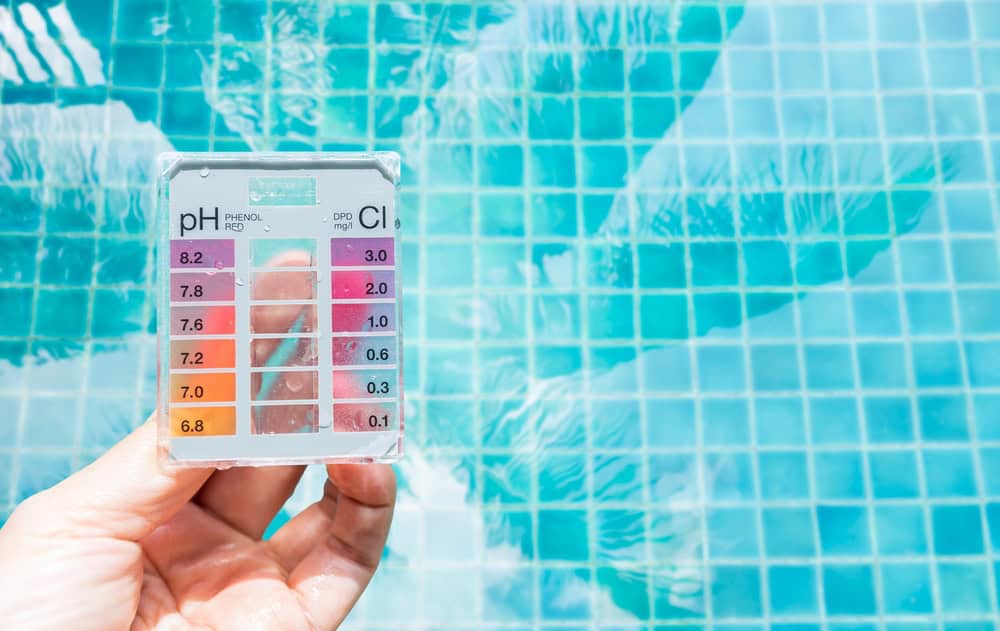
Total alkalinity measures the water’s ability to resist sudden pH swings. Most residential pools are kept in a range of roughly 80 to 120 parts per million, which keeps pH stable and water comfortable and easier to maintain. Alkalinity and pH interact closely, but they are measured and adjusted differently, and treating them as the same reading is one of the most common mistakes pool owners make.
Signs of Low or High Alkalinity
- Low alkalinity: pH that swings quickly after adding chemicals, and water that feels corrosive to metal fittings and surfaces.
- High alkalinity: cloudy water, scaling on tiles and equipment, and pH that resists correction even after repeated adjustment.
How to Test Pool Alkalinity Accurately
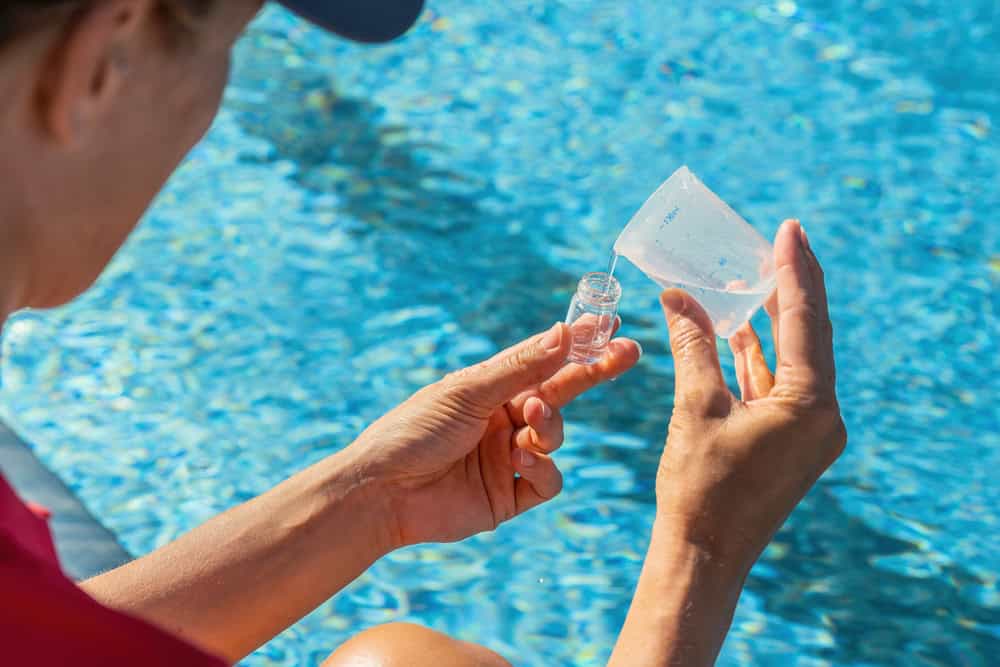
Test strips are fast but less precise, liquid drop kits are generally more accurate, and digital testers add convenience for frequent testing. Whichever method is used, take the sample from mid-depth, away from the returns and skimmer, and read it immediately rather than waiting, since results can drift the longer a sample sits before it is checked.
How to Raise Alkalinity in a Pool (Step-by-Step)
- Confirm current alkalinity and pH with a fresh test, and record both readings before adding anything.
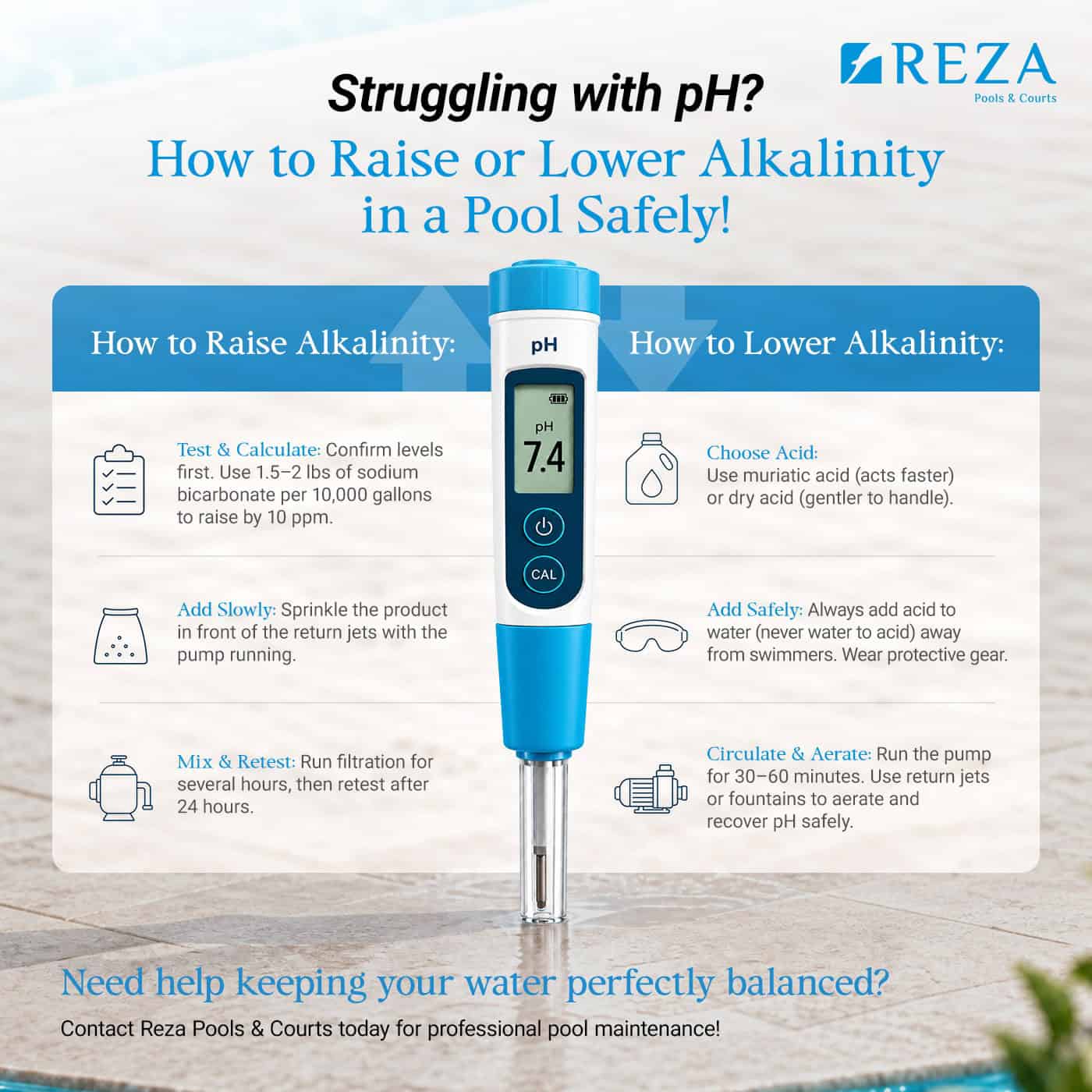
- Calculate the dose needed. As a general guide, roughly 1.5 to 2 pounds of sodium bicarbonate per 10,000 gallons raises alkalinity by about 10 ppm, though this varies by product concentration, so always check the label and your actual pool volume. Most alkalinity-increasing products are concentrated sodium bicarbonate, similar to household baking soda.
- With the pump running, sprinkle the measured amount in front of the return jets, or pre-dissolve it in a bucket of water first, rather than dumping it in one spot.
- Run filtration for several hours to mix it evenly, then retest after 24 hours and make a smaller follow-up adjustment if needed rather than a second large dose.
How to Lower Alkalinity in a Pool (Step-by-Step)
- Confirm the high reading and note current pH, and pause any products that raise alkalinity.
- Choose between muriatic acid or a dry pH reducer (sodium bisulfate). Muriatic acid acts faster and costs less, but requires more careful handling; dry acid is easier to measure and generally considered gentler to handle, though it acts more slowly.
- As a general guide, roughly 1.5 quarts of muriatic acid per 10,000 gallons lowers alkalinity by about 10 ppm, though the exact amount depends on product strength and pool volume, so follow the label and use smaller doses rather than one large correction.
- Always add acid to water, never water to acid, wear gloves and eye protection, work in a ventilated area, and keep chemicals away from children and pets. Never mix pool chemicals together, and never combine acid with chlorine products directly.
- With the pump on low speed or as the product directs, pour the acid in a targeted area away from swimmers, then circulate for 30 to 60 minutes before anyone enters the water.
- To recover pH without raising alkalinity again, use aeration, such as return jets, a fountain, or a spa jet, which lifts pH gently on its own. Retest after several hours and repeat small corrections rather than one large dose.
Common Mistakes and Keeping Alkalinity Stable
The most frequent mistakes are dosing too much at once, trying to fix pH before alkalinity is stable, ignoring a leak that keeps diluting chemistry, mixing chemicals together instead of dosing one at a time, and skipping the retest before adding more product. Weekly testing, along with good filtration, regular brushing, and clean filters, prevents most swings before they become a problem. In Saudi Arabia’s climate, high heat speeds up evaporation and increases bather load in summer, which can shift both alkalinity and pH faster than in milder climates, so testing more often during peak heat and after major refills is worthwhile. Persistent imbalance, suspected leaks, corroded equipment, or discomfort handling acid safely are all good reasons to bring in a professional.
Professional Pool Chemistry Support from Reza Pools & Courts
- Over 40 years of experience maintaining pool water chemistry since 1978
- Locations in Jeddah, Riyadh, Al Khobar, and NEOM
- Technicians experienced in alkalinity, pH, and chlorine balancing across residential and commercial pools
- Maintenance routines suited to Saudi Arabia’s heat, dust, and evaporation conditions
Let Professionals Keep Your Water Balanced
Alkalinity sits behind almost every other pool chemistry problem, since unstable alkalinity makes pH difficult to hold steady no matter how carefully it is adjusted. Reza Pools & Courts has maintained pool water chemistry across Saudi Arabia for more than 40 years, with technicians experienced in testing, dosing, and correcting alkalinity, pH, and chlorine together rather than in isolation. Contact Reza Pools & Courts pool maintenance company today. Our team can test your water, correct any imbalance, and set up a routine that keeps it stable.