

Complete Guide to Pool Shock Treatment
- A strong chlorine smell usually means high chloramines — and the pool needs shock treatment.
- Breakpoint chlorination requires raising free chlorine to 10x the combined chlorine level.
- Shock at night, run the pump for at least 8 hours, and retest before swimming.
- Middle Eastern heat and UV demand more frequent monitoring and post-dust-event shocks.
Table of Content
Did you know that the harsh “chlorine smell” wafting off your pool actually means the water needs more chlorine, not less. That odor comes from chloramines — compounds that form when chlorine bonds with sweat, oils, and organic waste — and the only way to eliminate them is by shock treating the pool water. For pool owners in the Middle East, where heat and UV exposure push chemical systems harder than in milder climates, knowing how to shock the pool properly is one of the most important maintenance skills to have.
What Is Shock for a Pool?
Shocking a pool means adding a concentrated dose of oxidizer (usually chlorine) to rapidly destroy contaminants that regular daily sanitation cannot keep up with. While routine chlorine maintains a steady baseline of 1–3 ppm, shock treatment temporarily spikes free chlorine levels to 10 ppm or higher to break apart chloramines, kill bacteria, eliminate algae, and restore water clarity.
The science behind this is called breakpoint chlorination: the threshold at which enough free chlorine has been added to fully oxidize all chloramines in the water. The general rule is that reaching breakpoint requires adding 10 times the combined chlorine reading. Fall short of that ratio, and the problem can actually worsen by creating additional chloramines.
Understanding Chlorine Types
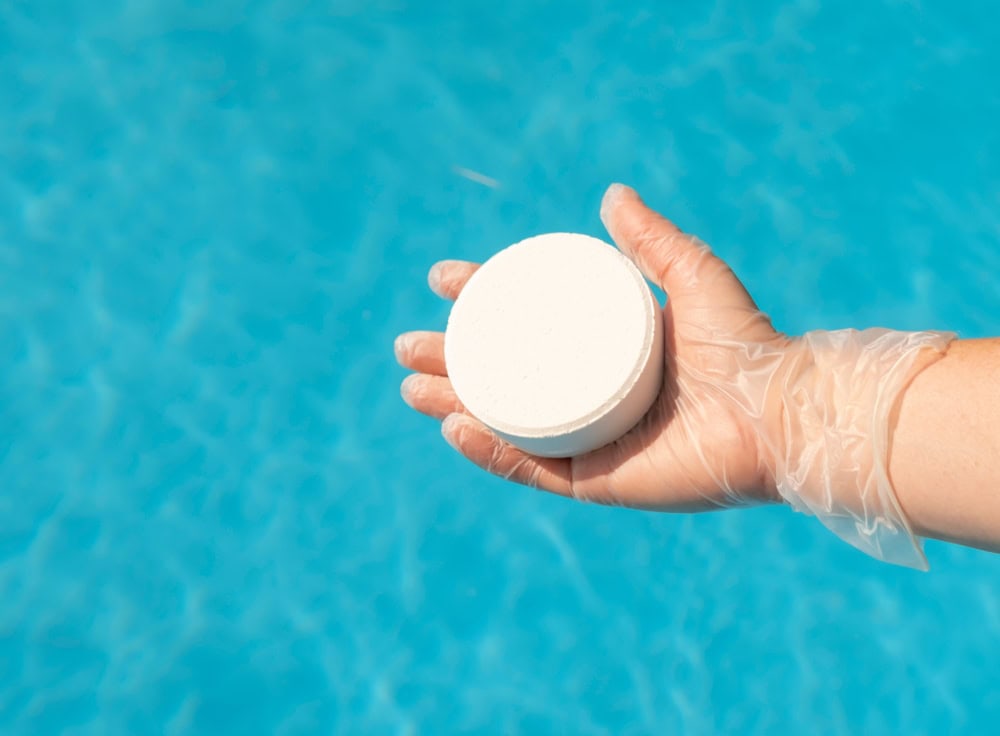
Before shocking a pool, it helps to understand what your test kit is actually measuring:
- Free Chlorine (FC): The active sanitizer available to fight bacteria and algae.
- Combined Chlorine (CC): Chlorine that has already reacted with contaminants — this is what produces irritation and odor. Calculate it by subtracting FC from Total Chlorine.
- Total Chlorine (TC): The sum of free and combined chlorine.
When combined chlorine exceeds 0.5 ppm, breakpoint shock treatment is needed.
Types of Pool Shock
Different situations call for different products:
- Calcium Hypochlorite (Cal Hypo, 65–78% available chlorine): The most common granular shock. Powerful and affordable, though it raises calcium hardness over time — worth monitoring in hard-water regions.
- Dichlor (56% available chlorine): Stabilized with cyanuric acid, making it effective in sunny conditions. However, repeated use raises CYA levels.
- Liquid Chlorine/Sodium Hypochlorite (10–12.5%): Fast-dissolving and leaves no residue. Ideal for quick adjustments but has a shorter shelf life.
- Non-Chlorine Shock/Potassium Monopersulfate: Oxidizes contaminants without raising chlorine levels. Useful for routine maintenance and allows swimming within 15 minutes, but it will not kill algae.
How Much Pool Shock to Use
The standard dosage for calcium hypochlorite is 1 pound per 10,000 gallons of pool water to raise free chlorine by approximately 10 ppm. Adjust from there based on the situation:
- Routine weekly maintenance: 1 lb per 10,000 gallons
- Algae treatment (light/green): Double the dose (2 lbs per 10,000 gallons)
- Severe algae or contamination: Triple the dose or more, retesting afterward
- Breakpoint chlorination: Calculate combined chlorine, then dose to reach 10x that reading in free chlorine
For liquid chlorine at 12.5% strength, approximately 10.7 fluid ounces per 10,000 gallons raises FC by 1 ppm. Always verify your pool’s volume before calculating — overestimating waste products while underestimating leaves contaminants behind.
How to Shock the Pool: Step by Step
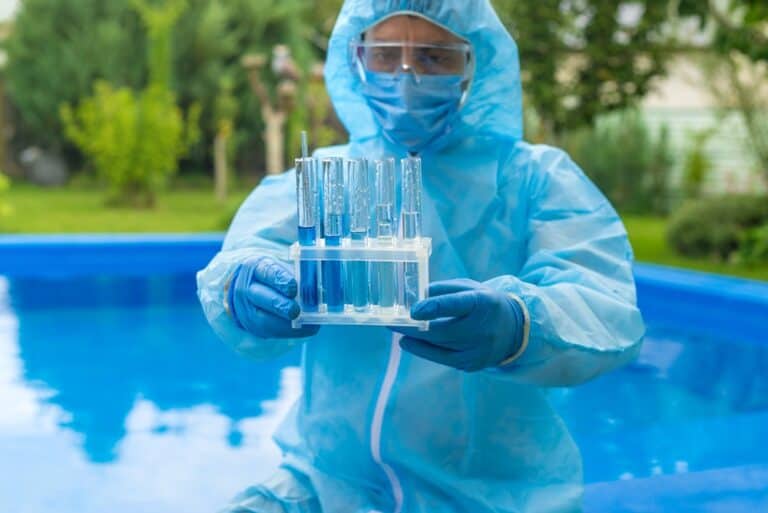
Step 1 — Prepare and protect. Wear chemical-resistant gloves, safety goggles, and avoid loose clothing. Never mix different shock products together.
Step 2 — Time it right. Shock in the evening or at night. UV radiation from sunlight degrades chlorine rapidly, and calm conditions prevent granules from blowing back toward you.
Step 3 — Pre-dissolve granular shock. For cal hypo and dichlor, dissolve in a bucket of pool water before adding. Pour slowly around the pool’s perimeter with the circulation system running. Liquid chlorine can be added directly.
Step 4 — Run the pump. Keep the filtration system running for a minimum of 8 hours to distribute the shock evenly and filter out destroyed contaminants.
Step 5 — Test before swimming. Wait until free chlorine drops below 5 ppm before allowing anyone back in the water. This typically takes 8–24 hours, depending on dosage and conditions.
When to Shock Your Pool
Beyond a regular weekly or biweekly schedule, shock your pool after these specific events:
- Heavy pool usage (pool parties, gatherings)
- Storms or heavy rainfall that introduce debris and dilute chlorine
- Extreme heat days above 40°C, which accelerate chlorine breakdown
- Seasonal opening and closing to reset water chemistry
- Visible algae, cloudiness, or combined chlorine above 0.5 ppm
Special Considerations for Middle Eastern Pools
Desert conditions require a more aggressive pool shocking schedule than temperate climates require. Ambient temperatures above 45°C break down chlorine faster, meaning shock treatments dissipate more quickly and may need to be repeated sooner. Intense UV radiation compounds this effect even when CYA levels are adequate.
Sandstorms and other dust events introduce fine particulates that overwhelm filtration and spike chemical demand — always shock after a significant dust event. On top of that, high evaporation rates concentrate dissolved solids, which can reduce the effectiveness of your shock treatment. Testing before and after shocking becomes especially important in these conditions to confirm you actually reached breakpoint.
Common Shocking Mistakes to Avoid
- Shocking during the day: UV light degrades chlorine before it can do its job.
- Adding shock directly to the pool without dissolving: Granules can bleach liners and stain surfaces.
- Under-dosing: Falling short of breakpoint actually increases chloramines instead of destroying them.
- Swimming too soon: Always test FC levels first. Anything above 5 ppm causes skin and eye irritation.
- Mixing shock products: Different chemical types can react dangerously. Use one product at a time.
Choose Reza Pools & Courts for Professional Shock Treatment
As with most things related to pool maintenance, consistent shock treatment for pool water prevents problems that become exponentially harder to fix the longer they go unaddressed. Building a routine that accounts for local climate, swimmer load, and seasonal shifts keeps water safe and equipment protected year-round.
To get professional pool water maintenance and expert advice on how much pool shock to use for your specific setup, consult with the specialists at Reza Pools & Courts.
References
Breakpoint Chlorination. Retrieved February 18, 2026, from https://intheswim.com/eguides/breakpoint-chlorination.html
Shock: Oxidation, Superchlorination, Hyperchlorination and Breakpoint Chlorination. Retrieved February 18, 2026, from https://hasa.com/blog/shock-oxidation-superchlorination-hyperchlorination-and-breakpoint-chlorination
Frequently Asked Questions About Pool Water Testing
Q: Why does my pool smell strongly of chlorine?
A: That odor comes from chloramines (combined chlorine), which form when chlorine reacts with sweat and contaminants. The solution is shock treatment — not reducing chlorine.
Q: What is breakpoint chlorination?
A: It’s the process of adding enough chlorine to fully oxidize chloramines. The rule of thumb is raising free chlorine to 10 times the combined chlorine level.
Q: How long should I wait to swim after shocking?
A: Wait until free chlorine drops below 5 ppm. This typically takes 8–24 hours, depending on the dosage and conditions.
Q: Can I shock my pool during the day?
A: It’s not recommended. Sunlight rapidly degrades chlorine, reducing effectiveness. Evening or nighttime treatment is best.
Q: How often should pools be shocked in hot climates?
A: In extreme heat (40–45°C+), weekly or biweekly shock is common, with additional treatments after heavy use, storms, or dust events.
Q: What’s the difference between chlorine shock and non-chlorine shock?
A: Chlorine shock kills bacteria and algae while oxidizing contaminants. Non-chlorine shock oxidizes waste but does not sanitize or eliminate algae.
Q: When should I call a professional?
A: Persistent cloudiness, recurring algae, or difficulty reaching breakpoint may require expert testing and corrective treatment.