

Pool stains manifest in different types, be it a brown patch spreading across the pool floor that brushing barely touches or a blue-green tint creeping in near the heater. But with pool stains not all being the same problem, it’s not often clear which cleaning product actually fixes what you are looking at.
Organic stains from leaves respond to chlorine and a stiff brush. Metal stains from iron or copper need a completely different approach involving acid treatment and a sequestrant. Here’s how to tell the types apart before spending money on the wrong pool stain remover, and what actually clears each one.
Types of Pool Stains and What Causes Each One
Diagnosing Organic vs Metal Stains and Their Color Clues
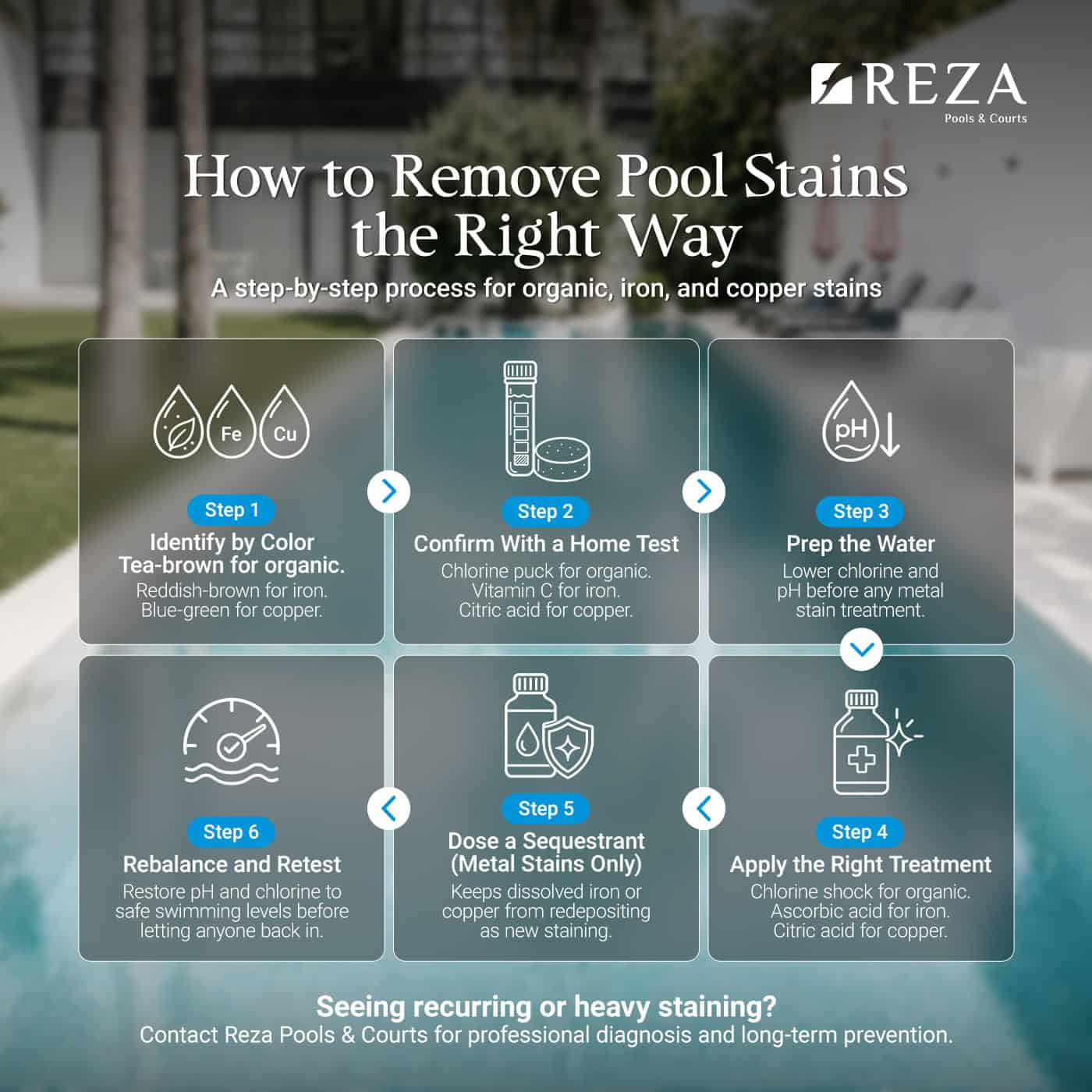
Pool stains generally fall under two types: organic stains, which respond to chlorine and brushing, and metal stains, which need sequestrants and acid-based treatments to lift and stay gone. Identifying which category a stain applies to is the first step to determining the right course of action.
Color provides a useful starting clue.
- Tea-brown tones typically point to leaves, dirt, and organic debris settling on the floor.
- Reddish-brown or rust-colored spots usually indicate iron, often traced back to the fill water or nearby metal fixtures.
- Blue-green or darker patches often mean copper, frequently near heaters or areas that have been treated with copper-based algaecide.
However, color alone is not a confirmed diagnosis. A simple in-pool test verifies what you are dealing with before putting any treatment into the water.
How to Diagnose a Stain Before You Treat It
Simple At-Home Stain Tests
Identifying the cause of a stain without lab work can be done with three quick tests. These need to be done directly on the stain.
- The chlorine puck test targets organic stains. Hold a trichlor puck against the stain for a few minutes. A stain that lightens or clears is almost always organic and treatable with brushing and shock.
- The vitamin C test targets iron stains in pool water. Crush a few vitamin C tablets into a sock or thin cloth, then hold it against the stain for 3 to 5 minutes. If the stain clears or lightens noticeably, iron is likely the cause.
- The citric acid test targets copper stains in pool water. Apply citric acid or dry acid in a sock to a suspected blue-green stain. A visible response confirms copper is likely involved.
Each result changes the treatment entirely, so running the right test first saves time and product.
How to Remove Pool Stains by Type
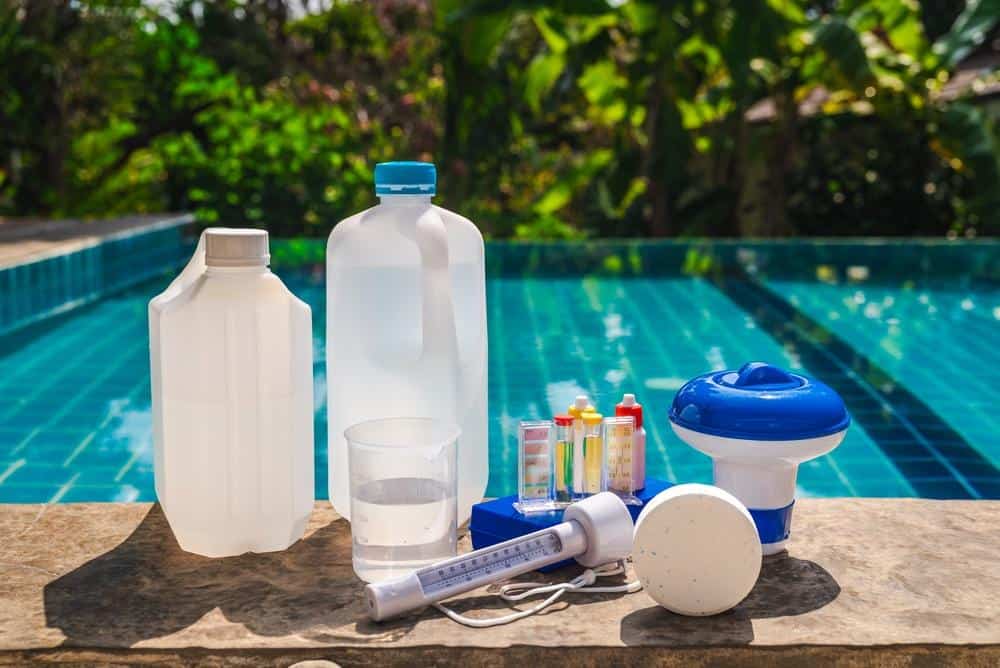
After identifying the cause, align the product and method accordingly. Verify that any treatment is safe for the pool’s surface, as plaster, vinyl, fiberglass, and tile react uniquely to acid and brushing.
Removing Organic and Leaf Stains
Skim, vacuum, and brush thoroughly before adding any chemical treatment. Surface debris makes shock treatment less effective because chlorine gets pulled away in oxidizing floating organics instead of attacking the stain. Once the pool is clear of debris, raise free chlorine to shock levels and brush the stained area daily until the mark fades.
Tea staining specifically comes from tannins released by leaves sitting on the pool floor. Leaf nets and a consistent skimming schedule stop it from returning, which is the most reliable way on how to remove leaf stains from pool surfaces long term.
Removing Iron and Copper Stains
Ascorbic acid treatment handles iron stains. To start, lower the chlorine and pH, then apply the acid directly over the stain or across the pool for widespread cases. Once the stain lifts, dose a sequestrant immediately to keep the dissolved iron from redepositing as fresh staining.
Citric acid works for localized copper spots. Apply it in a sock or cloth directly against the stain, running the pump so circulation moves the acid across the affected area over 24 to 48 hours.
A sequestrant maintains dissolved metal in a solution, preventing it from precipitating as new stains; however, it cannot eliminate existing metal in water without filtration or partial draining. After metal treatment finishes, check and adjust pH and chlorine levels to their proper balance before allowing swimmers back into the water.
Managing Pool Stains at Hotels and Commercial Properties
Hotel and resort pools face heavier loads of bathers and larger surface areas, both of which raise the risk of organic buildup and metal staining from more intensive equipment use. Visible staining affects guest perception fast, so getting quick, correct treatment is imperative.
A consistent, scheduled approach works better for commercial properties than reactive spot treatment. For owners, following a set cadence for maintaining water chemistry, stain diagnosis, and surface care is recommended, as this catches issues early before a guest might.
Reza Pools & Courts offers hotel pool maintenance built around this exact need. Our programs cover water chemistry, staining, and surface care on a set schedule, so you don’t have to rely on reactive approaches every time a mark appears on the pool floor.
Why Property Owners Choose Reza Pools & Courts
With over 40 years of pool work across Saudi Arabia, we at Reza Pools & Courts have a deep familiarity with local water sources and how mineral content contributes to metal staining specifically. Our experience spans residential villas, hotel and resort pools, and commercial recreation facilities.
We focus on both preventing and fixing issues in our maintenance plans. We also consider stain management to be integral to the same level of precision that characterizes all our custom builds.
Get Professional Support for Stain-Free Pool Water
Pool stains can be alarming, but they are fixable, and that starts with understanding the categories. Organic stains from leaves and debris clear with brushing and chlorine, while metal stains from iron or copper need targeted acid treatments and ongoing sequestrant use to keep them from coming back. If the stains persist, professional help and expertise can address them, especially in the long run.
At Reza Pools & Courts, we bring over 40 years of hands-on experience with Saudi Arabia’s water conditions to both residential pools and larger commercial properties, where we treat stain prevention as part of a complete maintenance approach.
Browse our hotel pool maintenance services today at Reza Pools & Courts, your trusted pool maintenance company. From routine water balancing to full stain diagnosis and treatment, our team keeps your pools clear and ready for guests year-round.
References
- Guidelines for Keeping Your Pool Safe and Healthy. Retrieved July 15, 2026, from https://www.cdc.gov/healthy-swimming/safety/what-you-can-do-to-stay-healthy-in-swimming-pools.html
- Guidelines for Safe Recreational Water Environments, Volume 2: Swimming Pools and Similar Environments. Retrieved July 15, 2026, from https://www.who.int/publications/i/item/9241546808